All the research I need. Here's Blog #17 — a high-volume seasonal intent blog that captures homeowners at every stage of the decision cycle. This one is different from every other blog in the series — it's not service-specific, it's timing-specific, which means it captures a completely new keyword cluster.
Strategy:
Title Tag (58 characters):
Best Time to Build a Pool in DFW | Season Guide
Meta Description (157 characters):
When is the best time to build a pool in DFW? Get a season-by-season breakdown for North Texas homeowners — and why fall is when the smartest builds start.
Every summer in Dallas–Fort Worth, the same thing happens. A homeowner spends July watching their neighbor's kids splash around in a backyard pool. By August they've made the decision: we're doing this. They call a pool builder in September. And the builder — one of the good ones — tells them the earliest they can break ground is December, with a realistic completion date somewhere around March.
Then they watch their new pool sit there for two months before the weather gets warm enough to actually use it.
This is one of the most predictable patterns in the North Texas pool industry. And it's entirely avoidable — if you understand how pool build timing works in DFW and what the right sequence of decisions looks like before the first machine ever rolls into your backyard.
This guide breaks down every season for pool construction in North Texas: what works, what doesn't, what the smart money does, and why the excavation phase specifically is affected by timing in ways most homeowners never consider.
Pool construction in the Dallas–Fort Worth area is not the same as pool construction in Arizona or Florida. North Texas has specific characteristics that make timing more consequential here than in other warm-weather markets:
Demand compression. DFW led the entire state of Texas in new pool permits in 2025, with 2,922 permits — approximately 44 percent of all new pool construction permits statewide. That concentration of demand means the best builders, the best excavation crews, and the best subcontractors in every trade fill their schedules fast. In a market this active, when you sign your contract determines what schedule you get.
Expansive clay soil behavior. North Texas's black clay soil is highly moisture-sensitive — it expands in wet conditions and contracts in dry heat. Pool excavation and foundation work in DFW clay behaves differently depending on when it's done. A dig in saturated spring clay is slower and harder to manage than a dig in the controlled moisture conditions of fall. Excavation scheduling isn't just a calendar question — it's a soil science question.
Temperature extremes. Gunite — the concrete shell that most DFW custom pools are built from — requires careful temperature management during application and curing. The optimal temperature range for gunite work in North Texas is 45 to 85 degrees Fahrenheit with low humidity. North Texas summers regularly exceed 105 degrees. North Texas winters occasionally dip into the mid-20s. The sweet spots are clear — and they're not July.
Builder and subcontractor availability. Quality pool excavation contractors in DFW — the kind who laser-check their elevations, install the gravel base correctly, and leave the site clean — run booked schedules just like the builders above them. The best crews in this market fill their spring and summer calendars months in advance. Getting on a quality excavation schedule is one of the most underestimated timeline factors in the entire pool build process.
Fall (September – November) — The Smart Season
Fall is, by a clear margin, the best time to start a pool build in the Dallas–Fort Worth area. Here's why:
Builder and excavation availability. The summer rush is winding down. Quality pool builders and excavation contractors who were booked solid through June, July, and August have openings on their schedules. Homeowners who start in fall get more attention, more scheduling flexibility, and access to crews that simply aren't available in peak season.
Ideal soil conditions for excavation. North Texas clay soil in the fall — after the summer's drying cycle but before the wet season resumes — is in its most workable state. It's not saturated and slow like spring clay. It's not baked rock-hard like mid-summer clay. Fall soil conditions in DFW are genuinely favorable for precise, efficient excavation.
Gunite temperature windows. The fall temperature range in North Texas aligns well with optimal gunite application conditions. September and October consistently fall in the ideal 45–85 degree window. Builders who start excavation in September are applying gunite in October and November — prime conditions.
Swimming by summer. A pool that breaks ground in September or October in DFW is realistically finished by January or February. That's six months of sitting by the pool before the first summer swim instead of watching it sit there until August. This is the single most compelling practical reason to start in fall.
Material pricing. Demand for pool construction materials in DFW drops as the build season winds down. Fall builds — depending on the builder — can occasionally capture better material pricing than peak-season contracts. This is not guaranteed, but the pattern is consistent enough to note.
Winter (December – February) — The Underrated Season
Winter pool construction in North Texas gets a worse reputation than it deserves. Texas winters are mild compared to most of the country. Occasional cold snaps — a few days below freezing — can pause plaster application and delay certain phases, but they don't shut down construction for weeks the way they do in northern states.
What winter has going for it in DFW:
What to watch in winter:
The bottom line on winter: If you can't start in fall, starting in winter is still significantly better than waiting for spring. A December start keeps you ahead of the spring scheduling crunch and puts you in the pool by April or May.
Spring (March – May) — Peak Season Problems
Spring is when most DFW homeowners think about starting a pool. It's also when the industry is at its most congested, its most expensive, and its most likely to disappoint on timeline.
The spring scheduling reality:
If you call a quality pool builder in March hoping to swim by Memorial Day, you are already behind. Custom pools take 8 to 14 weeks from excavation to completion under ideal conditions — and spring conditions in DFW are not always ideal. Spring rain events saturate clay soil, slow excavation, and can delay the entire build sequence. Spring is also when every quality excavation crew in the Metroplex is running at full capacity — the crews with availability in March are often the crews that weren't busy in January and February for a reason.
What spring builds look like:
The exception: Homeowners who locked in their builder contract in January or February, pulled permits in winter, and scheduled excavation for early March — those homeowners are running the spring build on fall/winter logic. They've solved the scheduling problem before spring hit. For everyone else who decides in March and calls in March — the delays compound from day one.
Summer (June – August) — The Hardest Season to Build
Summer in North Texas is brutal. Sustained temperatures above 100 degrees create genuine challenges for construction:
What summer builds are good for:
Homeowners who start a summer build are typically finishing by September or October — just in time to enjoy the pool in the best weather of the year and head into the next full season fresh. If you're committed to starting in summer, you'll still get your pool. You just need realistic expectations about timing, heat-related delays, and the fact that the spring scheduling window is gone.
The real cost of waiting until summer: A homeowner who decided in August 2025 and started the contract/design/permit process immediately might have broken ground in October 2025 and been swimming by February 2026. A homeowner who waited until June 2026 to start the process is realistically swimming in October 2026 at the earliest — missing an entire summer season.
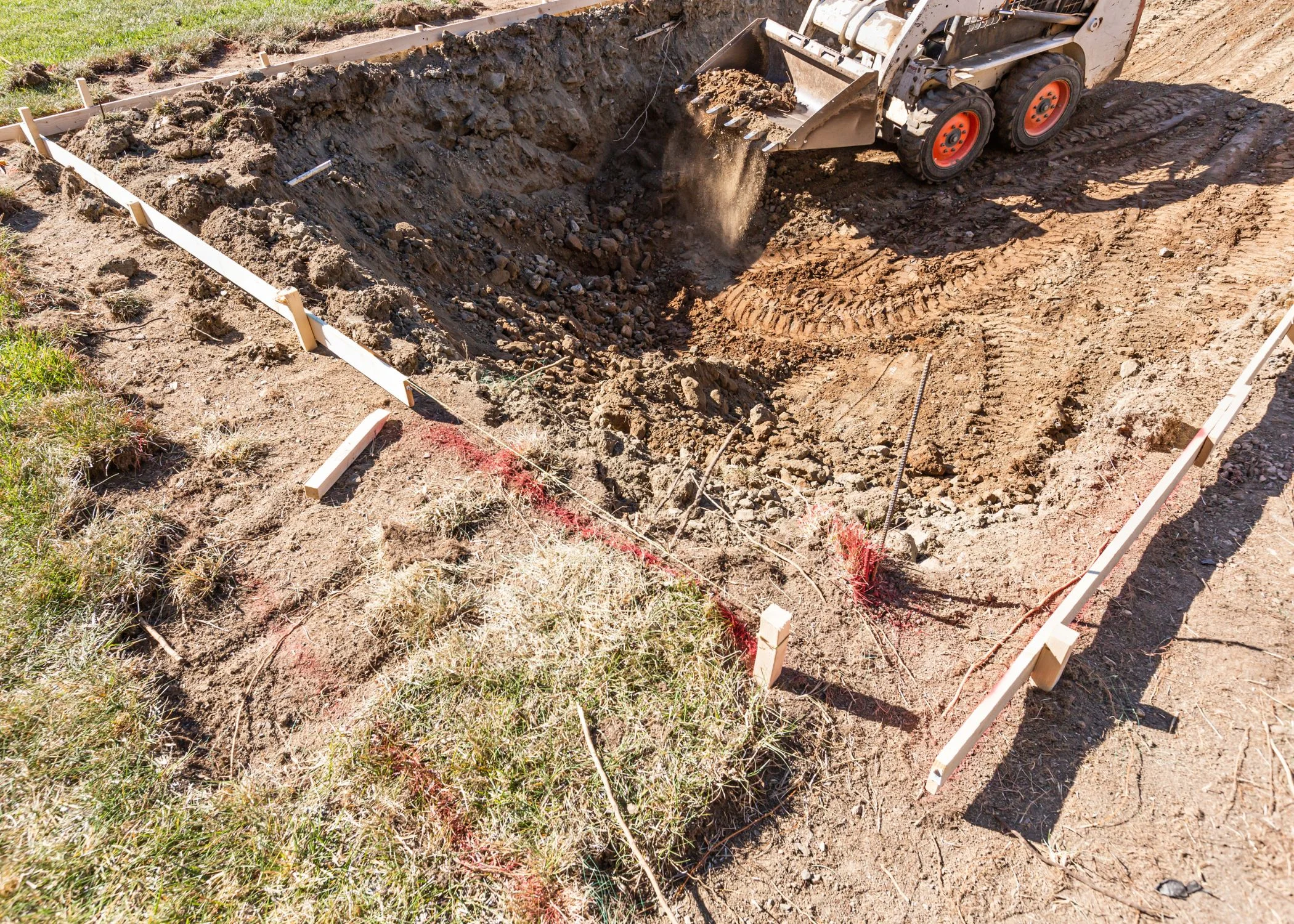
From an excavation standpoint, here's how the seasons affect the dig specifically:
Fall excavation: Best conditions. DFW clay in fall is workable, consistent, and predictable. Gravel base installation goes in clean. The site drains well. The gunite crew follows quickly because the calendar is aligned.
Winter excavation: Good conditions with caveats. If the ground is saturated from extended rain, the clay becomes significantly harder to work with and can complicate the base installation. A brief dry spell in January or February often produces excellent dig conditions in North Texas.
Spring excavation: Variable. Dry March conditions can be excellent. A wet April or May can slow the dig, complicate grading, and require additional wait time between excavation and base work. The scheduling pressure of spring means less flexibility if delays arise.
Summer excavation: Technically fine from a soil perspective — dry summer clay excavates predictably. The challenges are labor conditions, scheduling availability, and the downstream gunite management in extreme heat.
The excavation-specific recommendation: Get your excavation contractor confirmed and scheduled before the spring rush hits. The best pool excavation crews in DFW fill their March, April, and May calendars during November, December, and January. A homeowner who signs a pool contract in October and confirms their excavation sub in November is protected. One who calls in April is competing with everyone else who decided in spring.
Here's a realistic timeline from decision to swimming in North Texas:
Decision and design: 2 to 6 weeks
HOA approval (if applicable): 2 to 8 weeks — can run simultaneously with design in most communities
Permitting: 1 to 3 weeks depending on the municipality
Excavation scheduling: 1 to 4 weeks depending on season — fall/winter faster, spring compressed
Pool excavation: 1 to 2 days
Full build — excavation to completion: 8 to 14 weeks
Total timeline from decision to first swim:
The message is consistent: the earlier you start, the sooner you swim — and the more control you have over every phase of the process.
1. Deciding in summer and expecting to swim that summer
It rarely happens. The design, HOA, permit, and scheduling timeline takes months before excavation even begins. Summer decisions turn into fall builds at best.
2. Waiting for prices to come down
DFW pool construction costs have not trended downward in over 45 years of industry data. Material costs, labor rates, and permit fees move up — gradually most years, sometimes in jumps. The pool that costs $130,000 today almost certainly costs more next year.
3. Signing a pool contract without confirming the excavation sub
Builders sub out excavation. Who digs the hole matters — it sets up every phase that follows. Before you sign with a builder, ask who their excavation contractor is, verify that crew's track record, and confirm that the excavation is on the schedule before the spring rush hits.
4. Starting the HOA approval process after you're ready to dig
In Frisco, Prosper, Celina, McKinney, Argyle, Flower Mound, and Southlake, HOA architectural review must precede city permits. This process takes 2 to 8 weeks and cannot be rushed. Homeowners who discover this after they're expecting to break ground next week lose weeks of build time.
5. Choosing the excavation crew based on availability rather than quality
A crew with an opening on the schedule next week in April isn't necessarily the best option — it may be the option that's available because other builders have already passed. Quality excavation contractors in DFW fill their spring schedules early. An April opening can be a signal, not a gift.
At Pacesetter Excavation, we serve pool builders and homeowners across the Greater Dallas–Fort Worth area — from Frisco and Prosper to McKinney, Celina, Argyle, Southlake, Flower Mound, and surrounding North Texas communities.
The best time to schedule your pool excavation is before you need it. Fall and winter bookings go fast as builders plan their spring calendars. Homeowners who get their excavation contractor confirmed early — with a clear, itemized quote and a scheduled dig date — are the ones who break ground on time and swim when they planned to.
Same-day responses. Itemized quotes. Laser-checked elevations on every dig. We show up when we say we will — and we leave the site ready for the next trade.