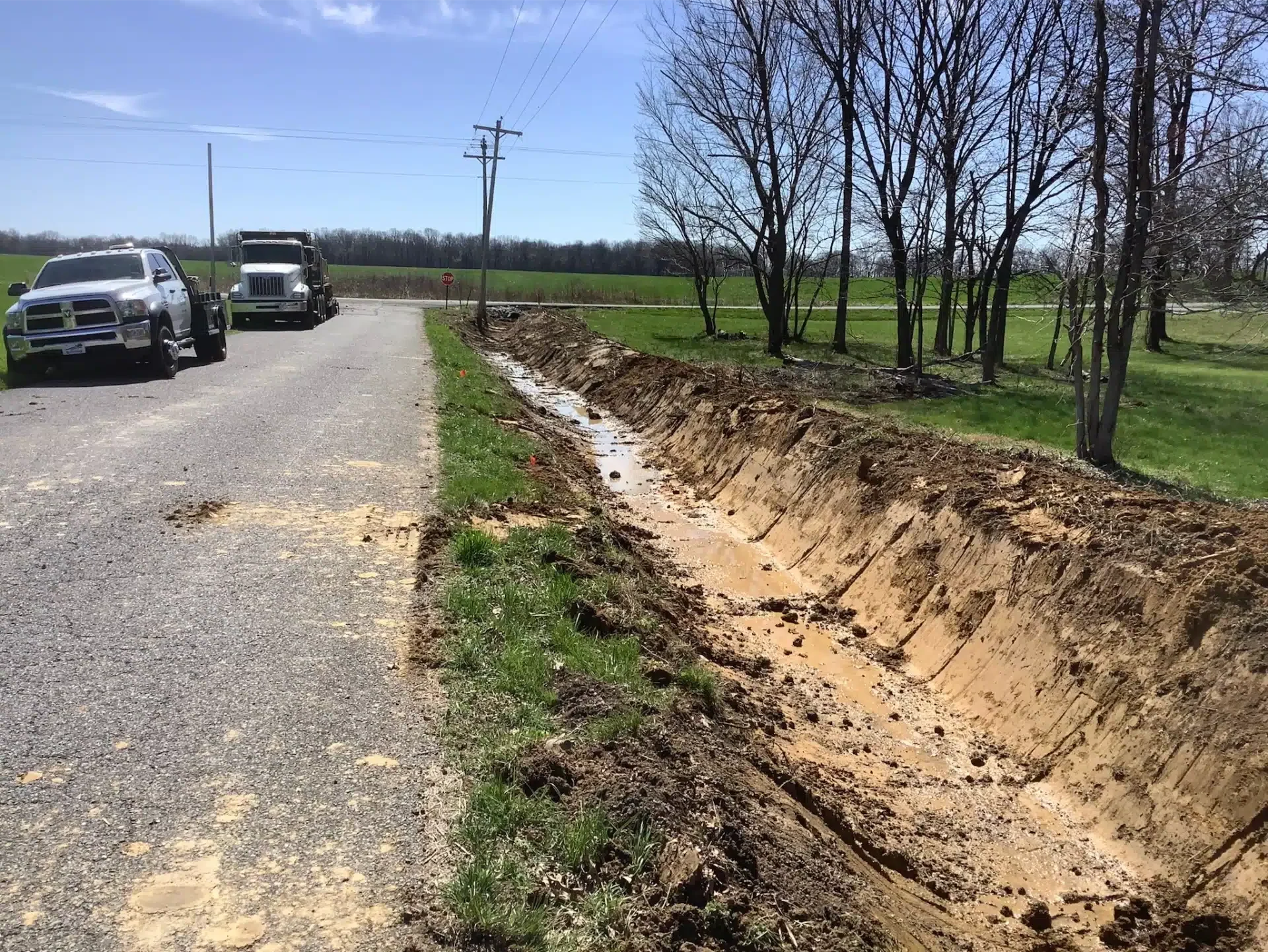
Excavation work temporarily exposes soil that would otherwise be protected by grass, mulch, or established landscaping, and during that exposed period, particularly given North Texas's periodic intense rainfall events, that soil is genuinely vulnerable to erosion that can affect your property and, in some cases, neighboring properties or storm drain systems if not properly managed.
Why Exposed Soil Erodes So Quickly in DFW
North Texas rain often comes in short, intense bursts rather than steady, gentle precipitation, and freshly excavated or disturbed soil, without established vegetation or proper protective measures, can lose significant material during even a single heavy rain event, particularly on sloped portions of a property.
Silt Fencing as a Standard Erosion Control Measure
Silt fence installation along the downhill perimeter of an excavation area is one of the most common erosion control measures, using a permeable fabric barrier staked into the ground that allows water to pass through slowly while trapping sediment before it can wash off the property.
Why Erosion Control Isn't Just a Courtesy
Many DFW municipalities have specific requirements around erosion and sediment control during construction and excavation projects, particularly for larger-scale work, meaning proper erosion control isn't simply a matter of good practice, it can be a genuine compliance requirement with real consequences for violations affecting drainage systems or neighboring properties.
Protecting Existing Landscaping and Hardscape During Excavation
Beyond regulatory compliance, proper erosion control protects your own property's existing landscaping, established turf areas, and any hardscape features near the excavation zone from sediment runoff and soil loss during the project's active phase.
Timing Erosion Control Relative to the Excavation Schedule
Erosion control measures need to be installed before excavation begins in earnest, not as an afterthought once soil disturbance is already underway, since the protection needs to be in place before the first significant rain event the project timeline encounters.
Managing Stockpiled Excavation Material
Soil and material temporarily stockpiled on site during an excavation project, before hauling off, also requires erosion control attention, since a stockpile itself can become a significant erosion source if left unprotected during the project's duration.
Why Neighboring Property Impact Matters
Poorly managed erosion during an excavation project doesn't just affect your own property, sediment runoff onto a neighboring lot or into a shared drainage area can create genuine disputes and, in some cases, liability concerns that proper erosion control specifically prevents.
Post-Project Restoration and Final Grading
Once excavation work concludes, final grading and any necessary re-vegetation or ground cover restoration completes the erosion control process, transitioning the site from active-project protective measures to its finished, stable condition.
Why Experienced Contractors Build This Into Every Project
A properly run excavation project incorporates erosion control planning as a standard part of the process, rather than treating it as an optional add-on or something addressed reactively only if a problem develops during the project.
Pacesetter Excavation incorporates proper erosion control into every DFW excavation project, protecting your property and complying with local regulations throughout the construction process.

Planning an excavation project and want proper erosion control included? Reach out to Pacesetter Excavation today.
Get Your Free, Itemized Quote → pacesetterexcavation.com/contact