If your pool builder or contractor has mentioned helical piers and you're not entirely sure what they are or why they matter, you're not alone. For most homeowners, helical piers are one of the least understood parts of a pool build — and one of the most important.
In the Dallas–Fort Worth area, helical pier installation isn't just a recommendation for certain projects. In many cases, it's the difference between a pool that holds up for decades and one that starts cracking, shifting, and failing within years of being built. North Texas soil is some of the most challenging in the country for pool construction — and helical piers exist specifically to solve the problem that soil creates.
This guide explains exactly what helical piers are, why pool construction in DFW so often requires them, what the installation process looks like, and what questions to ask before you hire anyone to install them.
A helical pier — also called a screw pile or helical pile — is a galvanized steel shaft with helical plates welded near the tip. Those plates allow the pier to be mechanically rotated into the ground, much like a screw being driven into wood, until it reaches a deep, stable, load-bearing soil layer far below the surface.
Once installed, helical piers transfer the weight of whatever sits above them — a pool shell, a structure, a retaining wall — down through the unstable upper soil and onto the solid, deep layer beneath. They anchor the structure in place against the soil movement that would otherwise push, pull, and shift it over time.
Key characteristics of helical piers:
That last point matters on a job site. Unlike concrete piles, which require days of curing before they can bear a load, helical piers are ready to support structure the moment installation is complete. That keeps your build schedule moving.
The Dallas–Fort Worth area sits on some of the most expansive clay soil in the United States. This type of soil — often called "black gumbo" — expands dramatically when wet and contracts when dry. In a region with Texas's weather patterns, that means the ground beneath your pool is constantly in motion.
What does that movement do to a pool without proper foundation support?
Helical pier installation in DFW anchors the pool foundation below the active moisture zone — the upper soil layer where all that expansion and contraction is happening. Once the piers reach stable soil deep below, the pool is locked in place regardless of what the surface soil does above.
This is not a luxury upgrade. In much of North Texas, helical pier installation for pool construction is an engineered requirement — not an optional line item a builder talks you into.
The consequences of skipping it are severe. A pool without proper foundation support in DFW expansive clay soil is a structural risk from day one. Repairs after the fact are far more expensive than the pier installation would have been — and in the worst cases, a full rebuild is the only option.
Not every pool build in DFW requires helical piers, but many do. Your pool builder or engineer will assess site-specific soil conditions to make the determination. Helical pier installation for pool construction in North Texas is typically required or strongly recommended when:
When a pool builder tells you helical piers are needed on your project, that recommendation deserves to be taken seriously. The cost of helical pier installation is a fraction of the cost of repairing or rebuilding a pool that failed because the foundation wasn't properly supported.
Here's a step-by-step look at what professional helical pier installation in DFW looks like from start to finish:
Step 1: Engineering Review and LayoutBefore any equipment is on-site, a licensed engineer determines how many piers are needed, where they're placed, and what depth and torque specifications each pier must meet. Pier placement is driven by the pool's design, load requirements, and site-specific soil conditions. Every helical pier installation in DFW that Pacesetter completes is executed to engineer-specified requirements.
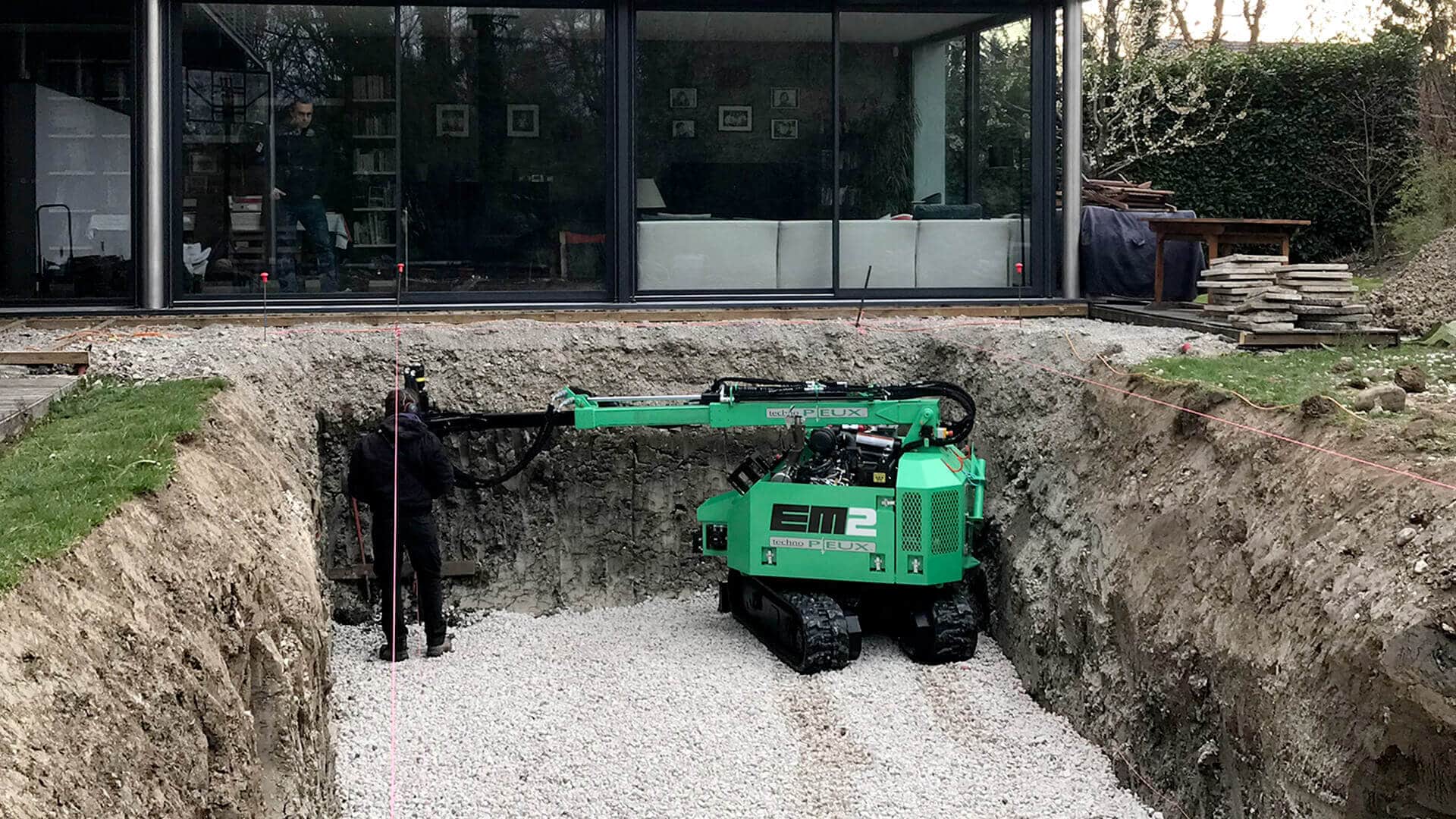
Step 2: Equipment MobilizationHelical pier installation uses compact hydraulic equipment that can be maneuvered into residential backyards without the kind of site disruption that larger machines cause. This is one of the practical advantages of helical piers over other deep foundation methods — the footprint on your job site is manageable.
Step 3: InstallationThe hydraulic drive head rotates each pier into the ground. As the pier advances, the helical plates cut through soil and pull the shaft deeper with each rotation. This continues until the pier reaches the target depth and achieves the engineer-specified torque reading that confirms it has reached load-bearing soil.
Step 4: Torque Monitoring and VerificationThis is the step that separates professional helical pier installation from guesswork. Every pier is torque-monitored throughout the installation process. Torque readings provide real-time confirmation that the pier is advancing through the right soil conditions and has achieved the structural capacity required by the engineer's design. Without documented torque logs, there is no verified proof that any pier is performing as designed.
At Pacesetter Excavation, every helical pier installation in DFW is torque-monitored and documented. You get verification, not just assurance.
Step 5: Documentation and HandoffUpon completion, torque logs and installation records are provided for engineering review and project files. This documentation is important for inspections, structural warranties, and future reference if questions arise about the foundation.
There is no single answer — it depends on your pool's size, design, and the soil conditions beneath it. A standard residential pool in DFW might require anywhere from 10 to 20+ piers depending on what the engineer's plan specifies.
What determines pier quantity:
Your pool builder's engineer determines the pier layout based on all of these factors. Pacesetter installs to those specifications exactly — no shortcuts, no substitutions.
Helical pier installation cost in North Texas depends on the number of piers required, their depth, and the site conditions. Based on current market data:
That cost should be viewed against the alternative: pool structural repair or a full rebuild due to foundation failure, which can cost $50,000 to $200,000 or more. Helical pier installation for pool construction is not where to cut corners.
1. Do you install to engineer-specified torque requirements?This is non-negotiable. Every pier needs a target torque value based on the structural design. If an installer doesn't reference torque specifications, find someone else.
2. Do you provide documented torque logs at completion?Documentation of torque readings for every pier is how you verify that the installation performed as designed. It protects you, your builder, and your engineer. Demand it.
3. What equipment do you use, and can it access my backyard?Residential backyards in DFW can be tight. Your installer needs equipment sized appropriately for your site — not machines that can't get through the gate or that damage your yard in the process.
4. How many pool helical pier installations have you completed in the DFW area?Experience in North Texas soil specifically matters here. Helical pier installation in DFW clay conditions requires knowledge of how those soils behave and how to adjust installation in the field when conditions vary from what was expected.
At Pacesetter Excavation, helical pier installation for pool construction is a core part of what we do. We've installed piers on projects across the Greater Dallas–Fort Worth area — from standard residential pool builds in Frisco and McKinney to complex multi-pier scopes in Prosper, Argyle, and Southlake.
Every installation is torque-monitored and documented to engineer-specified requirements. We show up on time, execute the scope accurately, and leave the site ready for the next phase of construction. Pool builders and general contractors across North Texas count on us because we don't create problems — we solve them before they happen.
We work with homeowners directly as well. If your builder has told you helical piers are required for your pool and you have questions about the process, we're happy to walk you through it.

Don't leave your pool's foundation to chance.
Get your helical pier installation scheduled with Pacesetter Excavation. Serving DFW and surrounding North Texas communities.