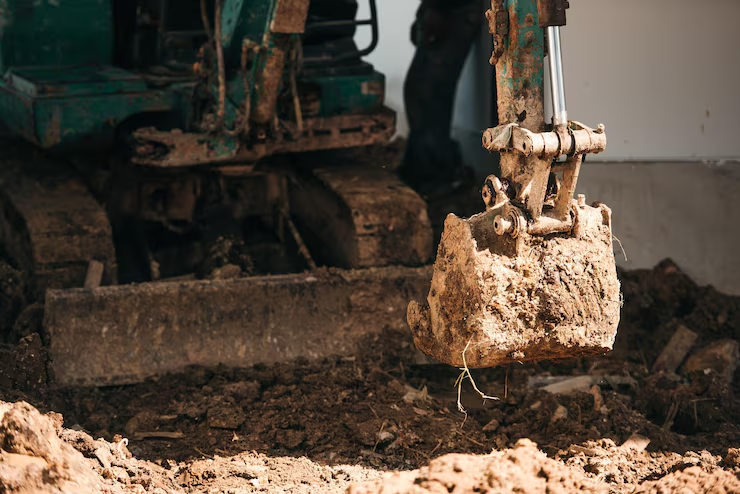
One of the most common questions homeowners ask before a project begins is, “How long does excavation take?” It’s a fair question—excavation sets the pace for everything that follows. The honest answer is that excavation timelines vary depending on several important factors. Understanding how long excavation takes and what influences the schedule helps homeowners plan confidently and avoid unnecessary stress.
Excavation speed isn’t just about how fast equipment can move—it’s about preparation and precision.
For many residential projects, excavation may take anywhere from a single day to several days. Larger or more complex projects can take longer. However, the timeline depends on:
No two sites are identical, which is why timelines differ.
Soil plays a major role in excavation timelines. Stable, predictable soil allows excavation to move efficiently. Challenging soil conditions—such as rocky or unstable areas—may require:
Professional excavation adapts to site conditions to maintain quality.
Proper drainage planning and grading take time. Rushing these steps can cause long-term issues such as:
Taking the time to shape and compact the site correctly protects the project later.
Tight access areas or limited equipment pathways may slow excavation slightly. Professional excavation crews plan:
Good planning keeps work efficient, even in challenging spaces.
Rain, excessive moisture, or extreme conditions can affect excavation timelines. Professional excavation contractors monitor conditions and adjust schedules to:
Weather delays are sometimes necessary to ensure quality.
Projects that begin with strong planning often experience smoother excavation timelines. Proper evaluation of:
Prevents mid-project surprises that can cause delays.
While it may seem beneficial to complete excavation as quickly as possible, rushing can result in:
Efficiency is important—but accuracy matters more.
Understanding what to expect helps homeowners feel confident about the schedule. Professional excavation contractors provide:
Clarity reduces anxiety about timing.

If you’re planning a project and want excavation handled with precision, planning, and realistic timelines, Pacesetter Excavation provides professional excavation services designed to keep your project moving smoothly without sacrificing quality. Partner with Pacesetter Excavation to move forward with confidence from the ground up.