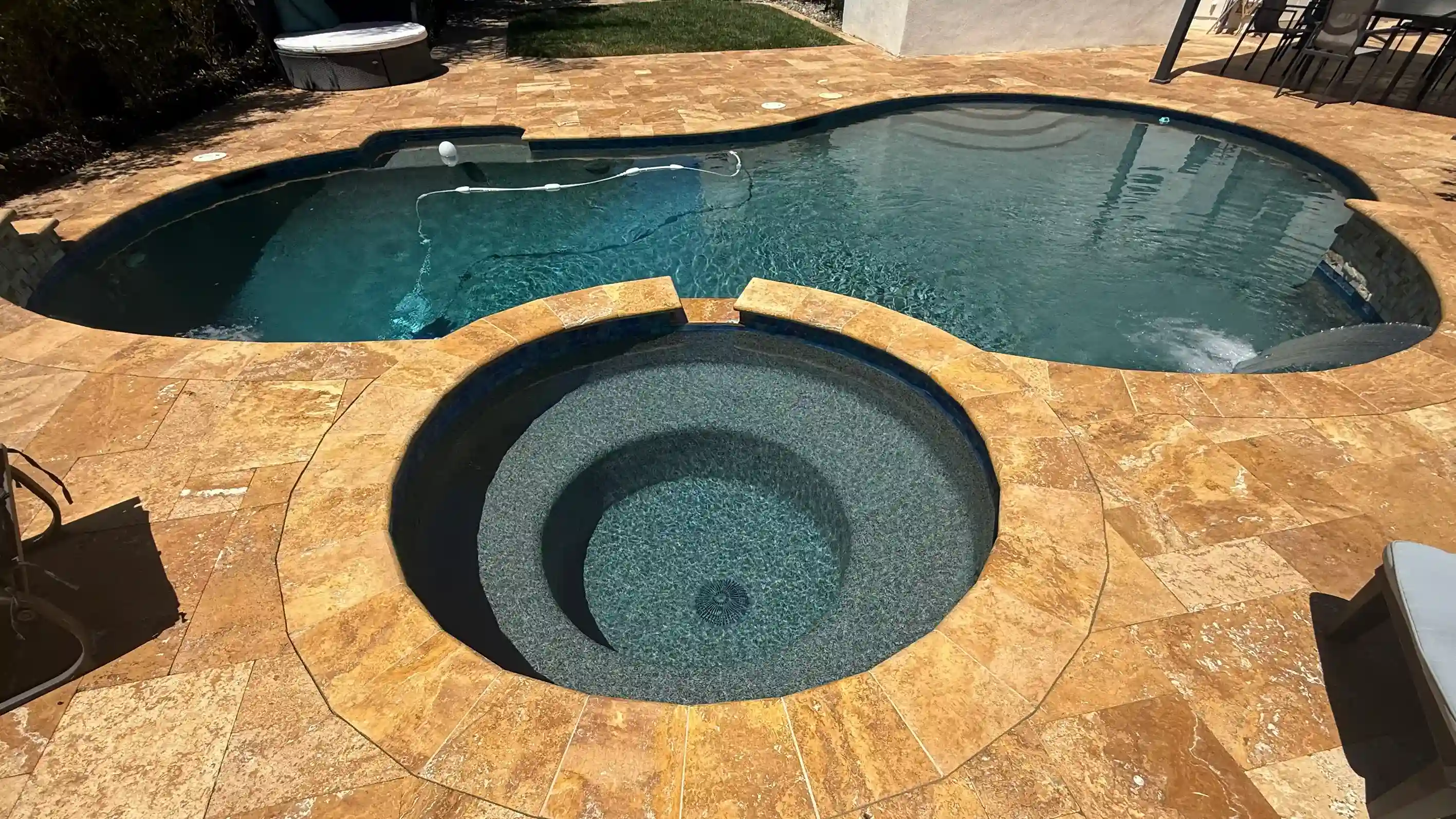
If you're planning a pool build in the Dallas–Fort Worth area, one of the first questions you'll ask is simple: how long does pool excavation take?
It's a fair question. You have a build schedule to plan around. You have trades lined up behind the excavation crew. You have a summer deadline in the back of your head. And the last thing you want is to get a vague non-answer that doesn't help you plan anything.
Here's the straight answer: for most residential pool excavations in DFW, the dig itself takes one to two days. That's the standard for a typical inground pool on a normal residential lot with reasonable site access and standard North Texas soil conditions.
But that one-to-two-day number comes with real variables — and in DFW specifically, those variables matter more than in most other markets. This guide breaks down exactly what affects pool excavation timeline in North Texas, what can make it faster, what can slow it down, and how to set realistic expectations before the machine rolls through your gate.
For context, here's how the excavation phase fits into the full pool build timeline in North Texas:
Design and HOA approval: 2–8 weeks (varies by community)
Permitting: 1–3 weeks depending on the city
Pool excavation: 1–2 days for standard residential pool
Gravel base installation (if included in excavation scope): same day or following day
Gunite/shotcrete shell: 1–3 days after excavation
Total build from excavation to first swim: 8–12 weeks typically
The excavation phase — the actual dig — is one of the fastest phases in the entire build. What takes time is everything around it: permits, HOA approvals, scheduling, and weather. But the quality of the excavation sets up every phase that follows, so speed is only part of the equation. Accuracy matters more.
Every pool excavation in North Texas is different. Here are the variables that determine whether your dig takes one day or three:
1. Pool Size and Shape
This is the most direct driver of excavation time. A standard rectangular pool digs faster than a large freeform pool with multiple elevations. A simple plunge pool takes less time than a resort-style build with a full spa, sunken firepit, tanning ledge, beach entry, and raised water features. Every additional custom element adds layout time, excavation time, and verification time.
A standard 14 x 28-foot pool typically excavates in one full day with the right equipment. A large freeform pool with a spa and sunken firepit can take a full day and a half to two days. Complex multi-feature designs on large lots may push to three days.
2. DFW Soil Conditions
This is where North Texas diverges from other markets — and it's the variable most homeowners don't account for.
The Dallas–Fort Worth area sits primarily on expansive black clay soil — dense, sticky when wet, and significantly harder to excavate than sandy or loamy soil. Moving through DFW clay takes more time per cubic yard than softer soils elsewhere in the country. Skilled operators manage this efficiently, but it's always a factor in the timeline.
Beyond clay, here's what can significantly extend pool excavation time in DFW:
3. Site Access
How equipment gets into your backyard matters enormously for timeline. A wide, unobstructed side gate that accommodates a full-size excavator is the ideal scenario — the dig moves fast. A narrow gate requiring compact equipment, a mature tree overhanging the access route, or a sloped side yard that complicates equipment positioning all add time.
In established DFW neighborhoods — parts of McKinney near the historic district, older Frisco builds, custom estates with mature landscaping — tight site access is common. Compact equipment gets the job done, but it takes longer. A professional pool excavation contractor in DFW assesses site access during the quote process and factors it accurately into the timeline.
4. Gravel Base Installation
If the 6-inch compacted gravel base is included in the excavation contractor's scope — which it should be for any professional pool build in DFW clay soil — the base installation adds time to the excavation day. Typically this is completed the same day or the morning following the dig, depending on pool size and scope.
The base has to be level, continuous, and properly compacted. Rushing it to save time creates structural problems that show up years later in the pool shell. A professional crew doesn't cut corners here.
5. Pool Depth and Feature Complexity
Standard pool depth in DFW maxes around 8 to 8.5 feet. Deeper custom pools require more material removal and more precise wall management during the dig. Features like negative-edge walls, elevated beam details, and complex bench configurations all add layout and excavation time.
6. Crew Size and Equipment
A single operator with a mid-size excavator digs at a different pace than a crew with multiple machines and dump trucks staged for continuous operation. Professional pool excavation contractors in DFW scale their crew and equipment to the job scope — but you should know what to expect when you confirm your dig date.
7. Weather
North Texas weather can directly affect pool excavation timeline. Heavy rain before the dig date can saturate clay soil, making it significantly harder to work with and slowing the overall pace. A rain event during the dig can pause operations for safety and site stability reasons. Summer heat in DFW doesn't typically halt operations but does affect the working day length.
The most common weather-related excavation delay in North Texas is a pre-dig rain event that saturates the clay. A professional contractor communicates transparently when weather affects scheduling — not the morning the crew is supposed to show up.
Here's what homeowners and pool builders can do to protect the excavation timeline:
Get permits handled early. Permits are the number one cause of excavation delays in DFW. Most cities — Frisco, McKinney, Prosper, Celina, Dallas — require building permits before any excavation begins. Permit processing in DFW municipalities typically takes one to three weeks. Start the application process the moment your design is finalized and your HOA approval is in hand.
Confirm HOA approval before scheduling the dig. In Frisco, Prosper, McKinney, Celina, and other master-planned communities across DFW, HOA architectural review must be completed before city permits are issued. Missing this step delays the entire project by weeks.
Clear access before dig day. Remove furniture, planters, play equipment, and anything else obstructing the access route and the excavation area. Know your gate dimensions. Confirm the route with your excavation contractor before the day of the dig.
Have utilities marked. Call 811 well before dig day to have public utilities marked. Identify and mark private utilities — irrigation systems, invisible fence wiring, low-voltage lighting, gas lines — separately. Don't leave this for the morning of the dig.
Book early in the season. In DFW, pool build season runs roughly March through October. Reputable excavation crews fill their schedules fast once spring hits. If you want a spring or early summer dig date, your excavation contractor should be confirmed months before that date arrives.
In DFW pool excavation, unexpected delays happen. The most common causes:
A professional pool excavation contractor in DFW communicates these situations clearly and in real time — not the next day, and not with a surprise change order attached. Make sure you know how your contractor handles these scenarios before you sign anything.
Here's a quick reference for how long common pool excavation types typically take in the Dallas–Fort Worth area:
Standard rectangular pool (no spa, standard depth):
1 day
Freeform pool with spa:
1 to 1.5 days
Pool with spa, beach entry, and tanning ledge:
1.5 to 2 days
Large custom pool with spa, sunken firepit, and multiple feature areas:
2 to 3 days
Any of the above with rock encountered:
Add 1 to 2+ days depending on rock volume
Tight access requiring compact equipment:
Add 0.5 to 1 day to any of the above
These are realistic North Texas estimates — not best-case scenarios.
Once the dig is complete and the gravel base is installed, your pool build moves quickly:
The excavation sets up everything that follows. An accurate dig with a properly installed gravel base means every trade behind it works off a solid foundation. An inaccurate dig means every trade compensates — in material, in time, and in cost.
At Pacesetter Excavation, we've completed over 1,200 excavation projects across the Greater Dallas–Fort Worth area. We know how long pool excavation takes in this market because we're in it every single day — in Frisco, Prosper, McKinney, Celina, Argyle, Southlake, and across North Texas.
Every dig gets the same treatment: laser-checked elevations, properly installed gravel base, clean site handoff, and same-day communication if anything in the field changes the scope or the schedule. We give you a realistic timeline upfront — and we deliver on it.

Request your free, itemized quote from Pacesetter Excavation. Same-day response.