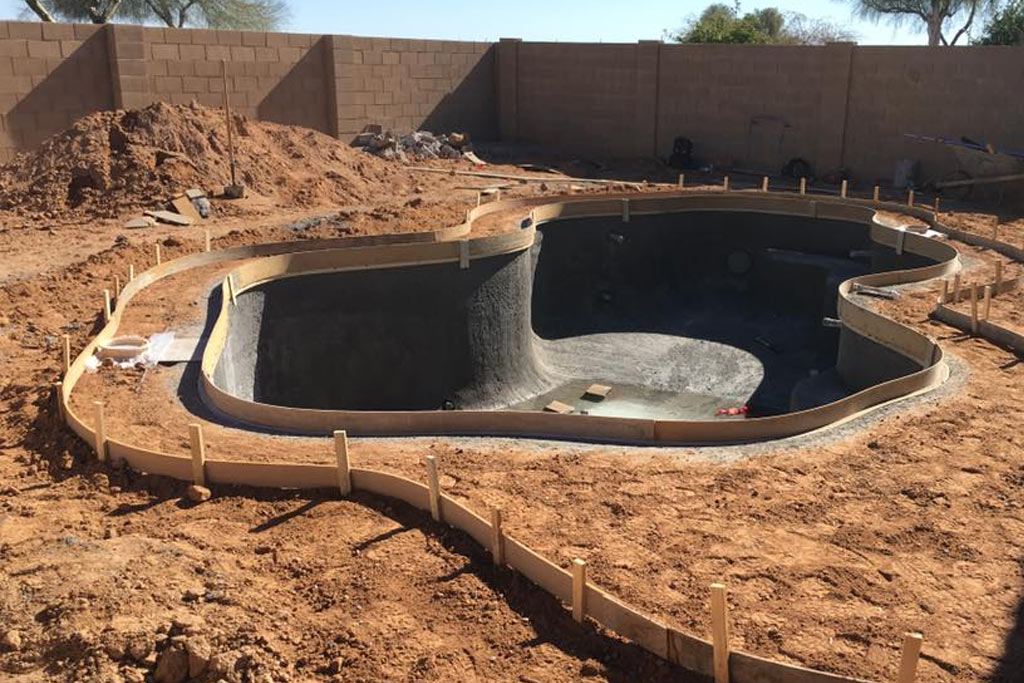
Celina, Texas is growing at a pace that most cities never see in a generation. From a population of roughly 16,979 in 2020 to an estimated 49,425 in 2025 — a staggering 191% growth rate in five years — Celina has established itself as one of the fastest-growing municipalities in the entire United States. New master-planned communities are going up across the city. Custom homes on large lots are being built by the hundreds every year. And with that growth comes an exploding demand for one of North Texas's most prized backyard amenities: the custom inground pool.
If you're a homeowner in Celina planning a pool build, or a pool builder working in this market, pool excavation in Celina, TX comes with specific challenges you need to understand before the dig begins. The soil conditions here are among the most demanding in Collin County. The HOA approval layers in Celina's master-planned communities add timeline complexity that catches homeowners off guard. And the rapid pace of new development means subsurface conditions vary more than in settled suburban markets.
This guide covers everything you need to know: what makes pool excavation in Celina unique, what the process looks like step by step, what it costs, how permitting and HOA approvals work, and how to choose the right pool excavation contractor for your Celina project.
Celina's growth story is unlike anything else happening in the DFW corridor right now. Master-planned communities like Light Farms, Mustang Lakes, Cambridge Crossing, The Parks at Wilson Creek, Legacy Hills, Bluewood, and Twelve Oaks have transformed this once-small city into one of the most in-demand residential destinations in the entire Metroplex.
These communities attract affluent families — the median home value in Celina sits near $550,000 as of early 2026, with luxury phases in Mustang Lakes and Twelve Oaks pushing well beyond that. Large lots, newer homes, and a lifestyle built around outdoor living make Celina one of the most fertile markets for custom pool construction in North Texas.
Pool builders working in Celina are booked months in advance. Demand is not slowing down. And every one of those builds starts with a pool excavation.
Pool excavation in Celina, TX sits on the same Blackland Prairie clay formation that runs through Collin and Denton counties — and Celina's soil is among the most challenging in the region for pool construction.
Highly Expansive Clay
Celina's predominant soil type is dense, expansive black clay — locally called black gumbo. This material absorbs moisture aggressively during wet seasons, swelling significantly in volume, then contracts hard during North Texas's dry summer months. That shrink-swell cycle creates constant ground movement that works against any pool shell not sitting on a properly prepared, engineered base. In Celina specifically, geotechnical reports frequently flag soil mitigation as a requirement — not a recommendation — before pool construction can proceed responsibly.
Engineering Requirements Are Real Here
Because of Celina's clay soil severity, reputable pool builders in this market require a geotechnical report before finalizing pool plans. That report assesses your specific lot's soil composition and determines what mitigation is needed — whether that's deep pier-and-beam foundation support, over-excavation with stable structural backfill, or a combination of both. Skipping this step in Celina's soil is how pools end up cracked, shifted, and failing within years of being built.
Pockets of Rock
While expansive clay is the dominant concern for pool excavation in Celina, pockets of limestone or caliche can be encountered during the dig — particularly in certain parts of the city where geological variation exists beneath the clay layer. Rock is always a cost-plus variable because no one can confirm its extent until the machine is in the ground. Any professional pool excavation contractor in Celina addresses this possibility upfront, in writing, before work begins.
Newer Development — Variable Fill Profiles
Much of Celina's residential construction has happened within the last several years. In communities that have been recently mass-graded and developed, the subsurface can include imported fill material and disturbed soil profiles that haven't fully settled. These conditions require experienced operators who know how to read what the ground is doing in real time — not just apply a standard approach to every dig.
This is one of the most important things Celina homeowners need to understand before scheduling a pool excavation — and one of the most commonly overlooked.
The majority of Celina's residential lots sit within master-planned communities — Light Farms, Mustang Lakes, Cambridge Crossing, The Parks at Wilson Creek, and others — each with active HOA architectural review committees. In most cases, HOA approval must be obtained before the City of Celina issues building permits. That means the approval process runs in sequence, not in parallel, and adds meaningful lead time to your build schedule.
What Celina's HOA approval process typically involves:
Starting this process early — in fall or winter, before the spring construction rush — is the single most effective way to protect your pool timeline in Celina. Homeowners who wait until spring to start the HOA approval process find themselves months behind in a market where reputable builders are already booked solid.
The City of Celina requires a building permit for all inground pool and spa construction. Key requirements from Celina's residential pool checklist:
These requirements are specific to Celina and reflect the city's awareness of its soil conditions and the structural risks that come with pool construction in expansive clay. A professional pool builder and excavation contractor in Celina knows these rules and builds them into the project scope from the start.
Here's the full process for professional pool excavation in Celina, TX from equipment arrival to site handoff:
Step 1: Site Assessment and Equipment Selection
Access route, gate dimensions, overhead clearances, tree locations, grade changes, and utility identification are all assessed before dig day. Celina's master-planned communities tend to have newer infrastructure and more standardized lot layouts — but access conditions still vary, and the right equipment needs to be confirmed before mobilization, not after arrival.
Step 2: Utility Marking
Call 811 before any excavation begins. Public utilities are marked at no charge. Private utilities — irrigation systems, gas lines, low-voltage lighting, invisible fence wiring — need to be identified by the homeowner or builder separately. In Celina's newer master-planned communities, irrigation infrastructure is extensive. Know where it is before the machine starts moving.
Step 3: Laser Layout and Elevation Verification
The pool footprint is staked and laser-checked against the engineer's plans. Every elevation point is confirmed before excavation begins. In Celina's clay soil, precision at this stage protects every trade that follows. An inaccurate elevation means the gunite crew compensates, the plumber adjusts, and the cost of one careless layout decision ripples through the entire build.
Step 4: Excavation
The dig begins. Celina's dense expansive clay requires skilled machine operation — clean wall cuts, accurate depth profiles, and real-time decision-making when soil conditions shift. When a pocket of rock or unexpected fill is encountered mid-dig, an experienced operator has a clear process. An inexperienced one calls it a change order and leaves you with delays and surprises.
Step 5: Gravel Base Installation
A 6-inch compacted gravel base is installed following excavation. In Celina's expansive clay conditions, this base is a structural requirement — not an upgrade. It must be level, properly compacted, and ready to support the pool shell and plumbing alignment through years of soil movement beneath it.
Step 6: Site Cleanup and Handoff
Excavated material is hauled off-site the same day. The worksite is graded, compacted, and left clean and ready for the gunite crew and plumbers who follow. Professional pool excavation in Celina ends with a site that the next trade walks onto with confidence.
For a standard residential pool dig in Celina on a normal residential lot with standard access, expect one to two days for the excavation. What extends that timeline:
Pool excavation pricing in Celina is consistent with the broader North Collin County market. Realistic 2026 ranges:
Standard pool excavation (no gravel base):
$4,500 – $8,500
Pool excavation with 6-inch compacted gravel base:
$6,000 – $10,500
Complex excavation — spa, beach entry, sunken firepit, multiple custom features:
$8,000 – $14,000+
Rock or unexpected buried material:
Cost-plus — add $2,000 – $10,000+ depending on volume
In Celina's premium pool market — where custom builds commonly run $55,000 to $400,000+ — excavation represents 10 to 15 percent of total project cost. Given that soil mitigation and specialized engineering can add $5,000 to $30,000 or more to a Celina pool project on top of base build costs, choosing a pool excavation contractor who understands this market and executes with precision is one of the highest-value decisions in the entire build.
1. Start the HOA approval process well before you plan to break ground
In most Celina master-planned communities, HOA review must be completed before the city issues permits. Start in fall or early winter if you want to dig in spring. Two to eight weeks for HOA review is normal — plan for it, don't be surprised by it.
2. Budget for soil mitigation upfront
Celina's clay soil frequently requires engineering solutions beyond a standard excavation. Ask your pool builder about the geotechnical report process, what mitigation is recommended for your specific lot, and get that cost factored into your budget before you sign a pool contract.
3. Confirm the rock handling policy before the dig
Ask every pool excavation contractor in Celina the same question: what is your process if rock is encountered, how is it priced, and how do you communicate it when it happens? Get the answer in writing before work starts.
4. Know your setback requirements
Celina's pool setback rules require at least 5 feet from the excavation point to foundations, retaining walls, and property lines — with additional engineering requirements if the pool exceeds 5 feet in depth. Know these before your builder finalizes the pool placement on your lot.
5. Protect your irrigation infrastructure
Celina's newer master-planned homes typically have extensive irrigation systems that won't be marked by 811. Walk your property, document what you know, and confirm with your irrigation contractor that their system is fully marked before dig day.
Pacesetter Excavation serves the Celina area and the entire northern DFW growth corridor — including Frisco, Prosper, McKinney, Argyle, and Southlake. We know Celina's soil, we understand the HOA and permitting landscape in this city's master-planned communities, and we bring the same professional standard to every dig: laser-checked elevations, properly installed gravel base, same-day soil removal, clean site handoff, and itemized quotes with no surprises.
Celina is one of the most demanding pool markets in North Texas right now. The homeowners and builders working here expect the best. That's the standard Pacesetter was built to deliver.

Request your free, itemized quote from Pacesetter Excavation today.