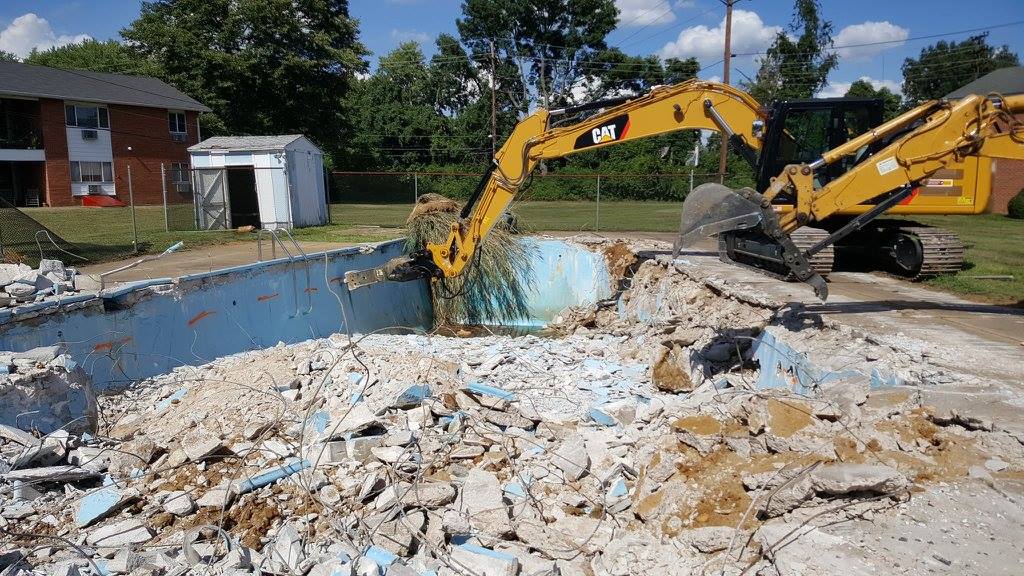
So the pool has to go. Maybe it's cracked and too expensive to repair. Maybe the maintenance costs have become impossible to justify. Maybe you're getting ready to sell and a dated, deteriorating pool is working against you rather than for you. Whatever the reason, swimming pool demolition in DFW is a bigger decision than most homeowners realize — and the choice you make between full removal and partial fill will affect your property for years to come.
This guide breaks down everything you need to know before scheduling a pool demolition in North Texas: what the process looks like, what each removal method actually means for your backyard and your property value, what it costs, and what separates a clean, professional job from one that causes problems down the road.
Pool demolition in the Dallas–Fort Worth area has become increasingly common, and the reasons vary widely from homeowner to homeowner. Here's what drives most pool removal projects in North Texas:
Maintenance costs have piled up. Between weekly service, chemicals, equipment repairs, and water bills, pool ownership in Texas runs $3,000–$6,500 per year. When a pool is aging and needs significant structural work on top of that, the math stops making sense fast.
The pool is cracked, leaking, or failing. DFW's expansive black clay soil is hard on pool shells. The ground shifts with moisture changes, and over time that movement can crack concrete, compromise the shell, and turn a manageable pool into a money pit. At some point, swimming pool demolition in DFW becomes more economical than continued repair.
Liability and safety concerns. A vacant or deteriorating pool is a liability. For homeowners with young children, elderly residents, or neighbors with kids, an unused pool creates ongoing risk. Many homeowners report a significant reduction in stress after pool removal is complete.
Selling the home. Not every buyer wants a pool. In today's DFW market, an outdated pool with visible wear can actually hurt your sale — especially if buyers calculate the cost of repair or removal into their offer. A clean, properly backfilled yard is often more valuable than a problem pool.
Reclaiming the backyard. A pool can consume 30–50% of a backyard. Once it's gone, that space becomes usable for outdoor living areas, a garage, landscaping, ADUs, or anything the homeowner wants to build.
This is the most important decision in any pool demolition project in DFW — and the one most homeowners don't fully understand until they're already in the process.
Full Swimming Pool Demolition
Full removal means exactly what it sounds like. The entire pool structure — concrete shell, walls, floor, plumbing, and all associated debris — is broken up and hauled completely off the property. The cavity left behind is backfilled with clean select fill, compacted in engineered lifts, and graded to match the surrounding yard.
What full removal gives you:
Full swimming pool demolition in DFW typically costs more upfront, but it eliminates every long-term complication.
Partial Pool Fill (Pool Abandonment)
A partial fill means the top portion of the pool walls — typically 18 to 36 inches — is broken up and pushed to the bottom of the cavity. Drainage holes are punched through the floor. The void is then filled with gravel and compacted dirt, and the surface is graded.
The buried shell stays underground.
What you need to know about partial pool removal in Texas:
For homeowners who have no plans to build, no near-term plans to sell, and simply want to reclaim their yard at a lower cost, partial fill may be a reasonable option. For everyone else — especially anyone planning to sell within the next several years — full swimming pool demolition in DFW is almost always the better investment.
Pool removal cost in North Texas depends on several variables. Here are realistic ranges based on 2025–2026 project data:
Partial Pool Fill (Pool Abandonment)
Full Swimming Pool Demolition
Factors that affect pool demolition cost in DFW:
Get an itemized quote. Any pool demolition contractor in DFW worth hiring will break down exactly what's included — permit handling, utility disconnection, demolition, debris removal, backfill type, compaction, and final grade. Vague quotes lead to surprise charges after the work is done.
Here's a step-by-step walkthrough of what a professional swimming pool demolition in DFW looks like from start to finish:
Step 1: Quote and Scope ReviewA professional contractor reviews the pool, its construction type, site access, and your goals for the space — and gives you a clear, itemized quote. Full removal or partial fill is discussed based on your specific situation.
Step 2: PermitsMost DFW municipalities require a demolition or fill-in permit before work begins. Dallas, Frisco, Plano, McKinney, and other cities each have their own requirements and timelines. A reputable contractor handles permit applications on your behalf.
Step 3: Utility DisconnectionBefore any demolition begins, pool utilities are properly disconnected and capped — electrical lines, gas lines if applicable, and plumbing connections at the equipment pad. This is a code requirement and a non-negotiable safety step.
Step 4: Pool DrainingThe pool is fully drained. Water must be disposed of properly — discharging heavily chlorinated water directly into the yard or storm system is not acceptable practice.
Step 5: DemolitionAn excavator breaks up the concrete shell and removes debris from the site. For full removal, everything comes out. For partial fill, the top walls are demolished and pushed to the bottom of the cavity.
Step 6: Backfill and CompactionThis is where the quality of the job is determined. A professional pool demolition crew in DFW backfills with clean select fill — not random debris or low-quality dirt — and compacts it in engineered lifts to prevent future settling. Corners get cut here more than anywhere else in the process.
Step 7: Final Grade and Site CleanupThe surface is graded smooth, matching the surrounding yard. A professional crew leaves the site clean, level, and ready for whatever comes next — whether that's sod, a patio, new construction, or simply a usable backyard again.
1. Do you handle the permit?Every legitimate pool demolition in DFW requires a permit from your city. If a contractor says you don't need one, or tells you to pull it yourself, walk away.
2. What type of backfill do you use?This matters more than most homeowners know. Clean select fill compacted in proper lifts is the standard. "Whatever's available" is not.
3. Is debris hauled off-site the same day?A professional crew removes demolition debris the same day. Piles of broken concrete left in your yard for days is a red flag.
4. Do you provide photos at completion?Professional pool demolition contractors document their work. Completion photos give you a record of the backfill and grade quality — important for future resale or permitting.
5. Full or partial — which do you recommend for my situation?A contractor who understands your property and your plans will give you a direct recommendation based on what actually makes sense — not just what's easiest to sell.
At Pacesetter Excavation, we've completed over 300 swimming pool demolitions across the Greater Dallas–Fort Worth area. Every project gets the same level of professionalism: clean, compacted backfill, proper equipment, same-day debris removal, and a site left graded and ready.
Founder Connor Hardy built Pacesetter specifically to raise the standard in this industry — and that mission shows in every pool demolition project we take on. We work with homeowners directly, walk you through full vs. partial removal based on your specific situation, and give you a clear quote with no vague estimates and no surprise charges.
We serve DFW communities including Dallas, Frisco, Prosper, McKinney, Celina, Argyle, Southlake, and surrounding North Texas areas.

Ready to reclaim your backyard?
Get your free, itemized pool demolition quote from Pacesetter Excavation. We respond the same day and get you on the schedule fast.