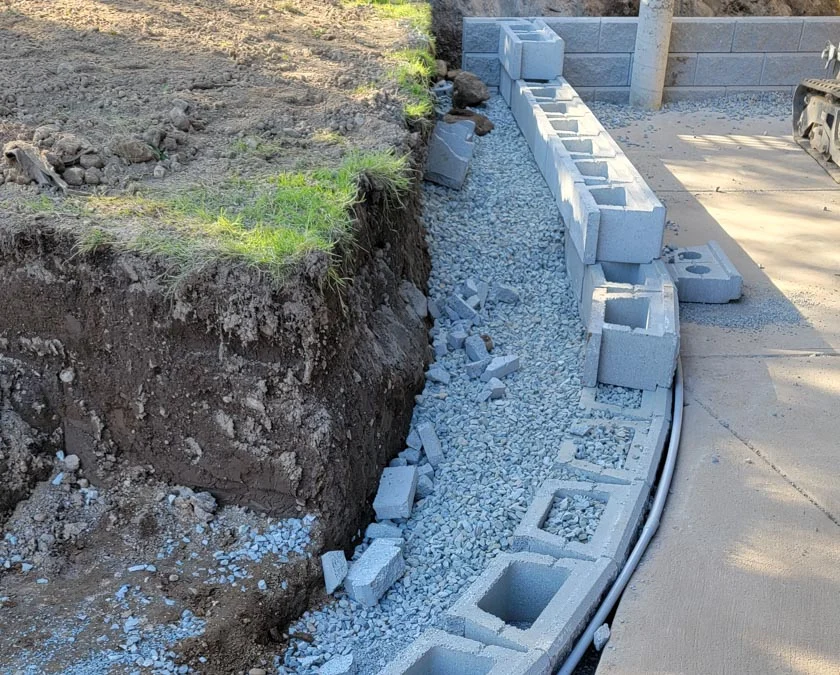
Retaining walls are built to hold back soil, control erosion, and create usable space on sloped properties. But before the first block or stone is placed, one critical step must happen: retaining wall excavation. The strength and longevity of a retaining wall depend heavily on how the ground beneath it is prepared.
Professional retaining wall excavation ensures the wall has the stable foundation and drainage support it needs to perform for decades.
Retaining wall excavation involves digging and preparing the base area where the wall will sit. This process typically includes:
Retaining wall excavation is not just about digging — it’s about structural preparation.
Retaining walls are under constant pressure from the soil behind them. Without proper retaining wall excavation:
Professional excavation ensures the base is level, compacted, and capable of supporting long-term pressure.
Water buildup behind a retaining wall is one of the most common causes of failure. Retaining wall excavation must include preparation for:
Professional retaining wall excavation reduces hydrostatic pressure and prevents water damage.
The depth of retaining wall excavation depends on:
Excavating too shallow can compromise stability. Excavating to proper depth ensures the wall can handle long-term stress.
After excavation, the soil must be compacted properly to prevent settling. Professional retaining wall excavation includes:
Improper compaction often leads to wall shifting over time.
Many retaining walls are built on uneven or sloped terrain. Retaining wall excavation must:
Precision excavation ensures the wall remains structurally sound on varying terrain.
Improper excavation can lead to:
Professional retaining wall excavation ensures structural safety and compliance with best practices.
Reliable retaining wall excavation services result in:
A strong wall starts with expert excavation.
Even the strongest retaining wall materials cannot compensate for poor excavation. Retaining wall excavation determines:
Proper groundwork ensures the wall performs reliably for years.

If you’re planning a retaining wall and need reliable, accurate, and stable retaining wall excavation services, Pacesetter Excavation provides expert excavation solutions designed to support long-term structural performance. Partner with Pacesetter Excavation to ensure your retaining wall starts on solid ground.